
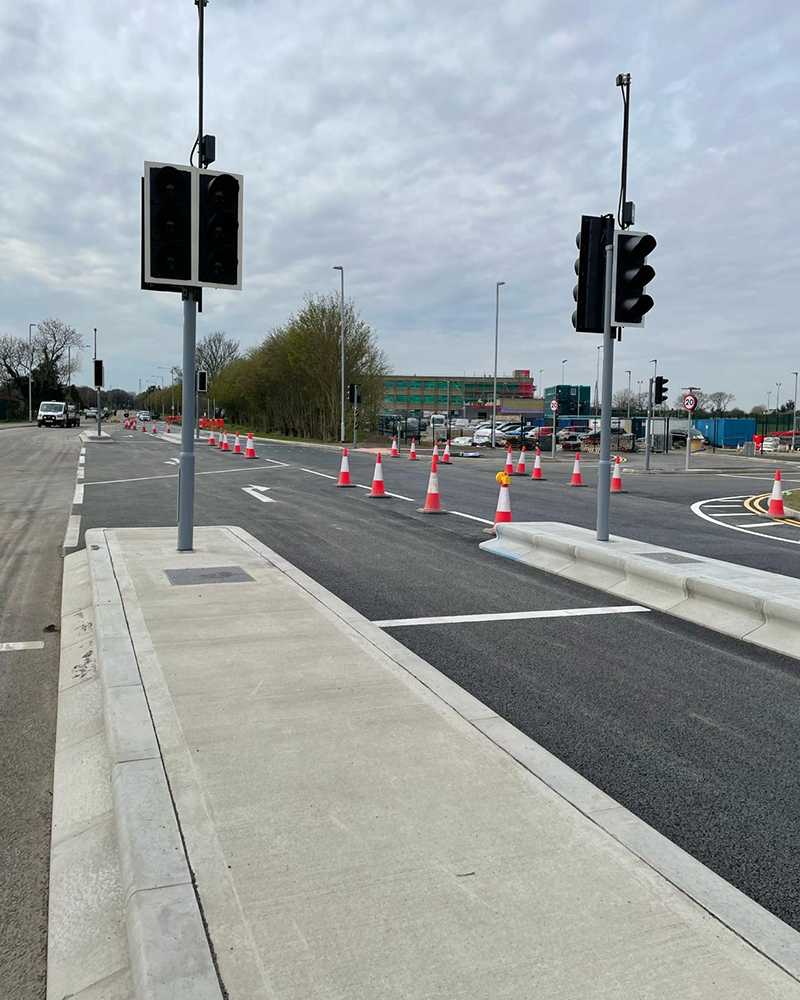
Roads are built to withstand constant use, but even the strongest surface will eventually show signs of wear. Heavy traffic, changing weather, standing water, poor drainage and general deterioration can all affect the condition of a road. When cracks, potholes and uneven areas become widespread, road resurfacing can provide a practical way to restore performance, safety and appearance.
Henderson & Taylor provides premium road resurfacing solutions for clients ranging from local authorities and civil engineers to blue-chip businesses, SMEs, builders and residential customers. With more than 60 years of industry expertise, our team provides an end-to-end service covering consultation, planning, design, manufacture, delivery and construction, creating tailored solutions for projects of different sizes and requirements. Contact us today for more information!
What is road resurfacing?
Road resurfacing is the process of renewing the upper layers of an existing road or paved surface. Depending on its condition, this can involve preparing the existing surface, repairing damaged areas and installing a new layer of tarmac, asphalt or another suitable surfacing material.
Unlike completely reconstructing a road, resurfacing can often improve the surface without replacing every underlying layer. It is useful where the underlying road remains sound but the surface has deteriorated.
The right resurfacing approach depends on factors such as traffic levels, drainage, ground conditions, existing construction, intended use and the required appearance. Options can include tarmac and asphalt, hot rolled asphalt, stone mastic asphalt, coloured asphalt, porous asphalt and dense bitumen macadam. Specialist solutions such as resin bound surfacing may also be suitable for particular applications.
Signs You Need Road Resurfacing
Knowing when resurfacing is appropriate can help prevent minor defects from becoming more serious and expensive problems. Several warning signs suggest that professional assessment may be worthwhile.
Widespread Cracking
Small cracks can sometimes be addressed through localised repairs. However, extensive or recurring cracking may indicate that the surface is reaching the end of its useful life. Resurfacing can create a more consistent, durable surface when deterioration is widespread.
Potholes
Potholes are more than an aesthetic problem. They can create hazards for vehicles, cyclists and pedestrians while contributing to vehicle damage. If potholes are becoming frequent despite repeated patching, resurfacing may offer a longer-term solution.
Uneven Surfaces
Rutting, depressions and uneven sections can affect how vehicles travel across a road. They may also collect water, increasing the risk of further deterioration. Resurfacing can restore a smoother, more consistent surface.
Drainage Problems
Water is one of the major causes of road deterioration. If water cannot drain effectively, it can weaken the surface and underlying structure. Resurfacing may form part of a wider solution, although drainage problems should be investigated first.
Faded Road Markings and Surface Wear
Resurfacing provides an opportunity to create a fresh, professional finish and incorporate suitable line marking as part of the wider project.
Increasing Maintenance Requirements
If a road requires regular patching and reactive repairs, ongoing maintenance costs can quickly add up. Resurfacing may provide a more efficient long-term approach where the existing surface has deteriorated significantly.
If you are noticing these issues, it may be time to consider resurfacing rather than continuing with isolated repairs. A professional assessment can help determine whether resurfacing is the most suitable solution and ensure the underlying issues are addressed.
The Benefits of Road Resurfacing
Road resurfacing can do more than make a tired road look better. A properly planned and professionally installed surface can improve safety, durability, usability and the overall presentation of a property or site. For public highways, private roads, industrial premises, schools, forecourts and car parks, the benefits can be substantial.
Improved Safety
A smoother, more level surface can help create safer conditions for drivers, cyclists and pedestrians. Resurfacing can address hazards such as potholes, cracks and uneven areas, while suitable road markings can further improve clarity and navigation.
Greater Durability and Resilience
Quality resurfacing can provide a durable surface designed to withstand regular traffic and changing weather conditions. Selecting the right material and construction method for the environment can help the finished road perform effectively for many years.
Better Appearance
A fresh surface can transform the appearance of a road, driveway, forecourt or car park. A uniform finish creates a professional impression for visitors, residents, customers and employees, while suitable colours and finishes can be selected for specific requirements.
Reduced Reactive Maintenance
Constantly repairing isolated defects can be disruptive and costly, particularly where deterioration continues to spread. Resurfacing can provide a more comprehensive solution by renewing a larger area and reducing reliance on repeated short-term repairs.
Improved Usability
A consistent road surface makes access easier for vehicles and pedestrians. This is particularly valuable at commercial and industrial sites.
Flexible Design Options
Road resurfacing does not have to be a one-size-fits-all service. Different materials, finishes and specifications can be considered according to traffic levels, site requirements, drainage, appearance and budget. This helps tailor the finished surface.
Long-Term Value
Investing in a well-planned resurfacing project can help protect the usability and presentation of a site. When appropriate materials, preparation and installation methods are combined, resurfacing can offer a durable improvement rather than simply providing a temporary cosmetic fix.
Ultimately, the value of road resurfacing comes from matching the right solution to the condition and purpose of the existing surface. Professional assessment is important because resurfacing should address the underlying requirements of the site as well as its visible defects.
How is road resurfacing done?
Professional road resurfacing generally follows a structured process. Planning helps ensure the finished surface suits its expected traffic and use.
1. Contact and Consultation
The process begins by discussing the site, existing problems and requirements. A contractor can advise on suitable options and materials.
2. Surveying and Assessment
The existing surface should be assessed before work begins. This identifies cracks, potholes, drainage concerns and structural problems. The findings can inform the scope of preparation and the most appropriate resurfacing method.
3. Planning and Design
The project can then be planned around practical needs, including materials, specifications, drainage, access and traffic management.
4. Surface Preparation
Preparation is essential. Damaged areas may be repaired, the existing surface cleaned or milled, and unsuitable material removed to create an appropriate foundation.
5. Surfacing
The selected material is installed using suitable plant and equipment to achieve the required depth, consistency and finish.
6. Finishing and Line Marking
Once the surface has been installed and completed, finishing work can be carried out. This may include road line marking, access details or other features required for the site. The result should be a practical, consistent surface ready for use.
Road Resurfacing with Henderson & Taylor
Henderson & Taylor delivers end-to-end road resurfacing for a wide range of clients and environments. From public highways and private roads to industrial sites, schools, retail car parks, footpaths, forecourts, caravan sites and driveways, our team can tailor the approach to the specific project.
Our service covers consultation, design, manufacture, delivery and resurfacing, creating a streamlined experience from discussion through completion. We also provide options including tarmac and asphalt, hot rolled asphalt, stone mastic asphalt, coloured asphalt, porous asphalt and dense bitumen macadam.
We operate modern plant and equipment, supported by a highly trained team. Whether a project involves minor patching repairs or major phased resurfacing works, we can help develop a solution based on the condition, use and requirements of the site. Contact us today!
When is resurfacing the right solution?
Resurfacing is often suitable when the existing road has widespread surface deterioration but retains sufficient structural integrity. It can provide a fresh wearing course without requiring complete reconstruction, helping projects balance performance, timescales and cost.
However, not every damaged road should simply be resurfaced. If the underlying foundations have suffered significant failure, there may be a need for deeper reconstruction or additional remedial work before a new surface can be installed. Drainage defects, unstable ground and repeated settlement may also need to be addressed as part of the wider project.
This is why an initial survey and professional assessment are so important. Looking only at visible potholes or cracks may not reveal the cause of deterioration. Understanding how the road is constructed, how it is used and where problems are occurring helps determine whether resurfacing, repairs or a more extensive solution is appropriate.
A considered approach can help ensure that investment is directed towards a solution that provides reliable performance rather than simply covering existing problems for the site over the longer term overall.
Things To Consider
Several factors should be considered before starting a resurfacing project.
Existing Surface Condition
The existing road condition influences preparation. Deeper structural issues may require more extensive work, making professional assessment important.
Traffic and Usage
Traffic volume and vehicle types matter. A driveway, school access road and industrial route can have very different requirements. The chosen material and specification should reflect expected usage.
Drainage
Effective drainage is essential for long-term performance because standing water can accelerate deterioration.
Timescales and Disruption
Resurfacing can temporarily affect access to roads, businesses, properties and facilities. Discussing the programme in advance can help minimise disruption and identify practical arrangements for maintaining access where possible.
Budget and Long-Term Value
The cheapest option is not necessarily the most economical. Material quality, preparation, installation and expected lifespan should all be considered when assessing the overall value of a project.
Permissions and Requirements
Depending on the location, ownership and scope of the work, permissions or other requirements may apply. Local regulations can vary, so it is sensible to establish these requirements before work begins.
In Conclusion: Build Better Roads for the Future
Road resurfacing can restore worn surfaces, improve safety and create a more durable environment. Recognising warning signs early can help prevent deterioration becoming a larger problem.
Henderson & Taylor supports projects from planning and design through to construction and completion. Whether you need a private road, commercial site, car park, driveway or public highway resurfaced, professional advice can help. Get in touch with us today!
FAQs
How long do road surfaces typically last?
The lifespan of a road surface depends on the material, installation quality, traffic levels, weather exposure and maintenance. We have seen road surfaces last 25 years or more when appropriately specified and maintained.
What affects the lifespan of road surfacing?
Traffic, heavy vehicle use, weather, drainage, installation quality, maintenance and material selection affect lifespan.
How do I know if a road needs resurfacing?
Cracks, potholes, uneven surfaces, drainage issues, extensive wear and frequent repair requirements can all indicate that resurfacing may be appropriate. A professional assessment can determine the best option.
Can road surfacing be customised?
Yes. Road surfacing can be tailored using different materials, finishes, colours and specifications to suit the property’s appearance, traffic requirements and practical needs.
Will road resurfacing disrupt my business or property?
Some temporary disruption is normally unavoidable, but careful planning and phased working can help minimise inconvenience. Your contractor should discuss access arrangements and project timescales with you.
Do I need planning permission for road resurfacing?
Requirements vary according to the location, ownership and scope of the work. It is advisable to check with the relevant local authority before starting a project where permissions may apply.
Is resurfacing better than patching potholes?
It depends on the condition of the road. Patching can be suitable for isolated defects, while resurfacing may be more appropriate when deterioration is widespread or repeated repairs are no longer providing a satisfactory long-term solution.
What types of road surfaces can be installed?
Options include tarmac and asphalt, hot rolled asphalt, stone mastic asphalt, coloured asphalt, porous asphalt and dense bitumen macadam. The most suitable material depends on the project requirements.
Can car parks and private roads be resurfaced?
Yes. Road resurfacing can be used for private roads, car parks, industrial sites, schools, forecourts, caravan sites, driveways, footpaths and other suitable areas.
How can I get started with a road resurfacing project?
Discuss your site’s condition, use and requirements with an experienced contractor. Henderson & Taylor can develop a tailored solution.
Ready to improve the safety, performance and appearance of your road or paved surface? Contact Henderson & Taylor today to discuss your requirements and discover how our experienced team can deliver a tailored road resurfacing solution from initial planning through to completion.
